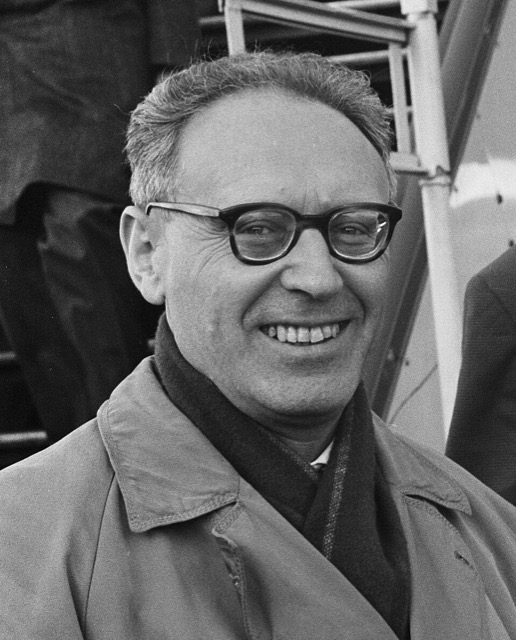
6THWorld chess champion
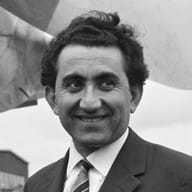
Mikhail Botvinnik
Mikhail Botvinnik was world champion 1948–1957, 1958–1960, 1961–1963, for 13 years. He won the title in 1948 by winning the championship tournament in The Hague (1–10), Moscow (11–20), ahead of Vasily Smyslov.
- Born
- 17 August 1911 · Kuokkala, Grand Duchy of Finland, Russian Empire
- Died
- 5 May 1995 · Moscow, Russia
- Learned chess
- Taught by a school friend of his older brother, on a home-made set
- Profiles
- FIDE World Chess MuseumWikipediaChessmetrics
Every title event
| Year | Opponent | Score | Result | Games | Where |
|---|---|---|---|---|---|
| 1948 | Tournament (2nd: Vasily Smyslov) | – | Won | – | The Hague (1–10), Moscow (11–20) |
| 1951 | David Bronstein | 12–12 | Drawn, kept the title | +5 −5 =14 | Moscow |
| 1954 | Vasily Smyslov | 12–12 | Drawn, kept the title | +7 −7 =10 | Moscow |
| 1957 | Vasily Smyslov | 12½–9½ | Lost | +3 −6 =13 | Moscow |
| 1958 | Vasily Smyslov | 12½–10½ | Won | +7 −5 =11 | Moscow |
| 1960 | Mikhail Tal | 12½–8½ | Lost | +2 −6 =13 | Moscow |
| 1961 | Mikhail Tal | 13–8 | Won | +10 −5 =6 | Moscow |
| 1963 | Tigran Petrosian | 12½–9½ | Lost | +2 −5 =15 | Moscow |
Across 7 title matches, Botvinnik won 36 games, lost 39 and drew 82: a score of 49% of the points.
Scores are listed winner first; a dash means the match wasn't played or was a tournament. Games are won, lost and drawn (+ − =) from Botvinnik's side, counted from chessgames.com and shown only where they add up to the official score. Source: Wikipedia, List of World Chess Championships.
Honours
- 5
- World championship titles
1948, 1951, 1954, 1958, 1961
Each year links to its source. World championship titles are title events won or kept. Olympiad board golds are the best score on a board. Most of these events didn't exist before the 1920s.
Impact at home: Soviet Union and Russia
- InstitutionsFounded his own school in 1963; its graduates include Karpov, Kasparov and Kramnik source
- PlayersKarpov credits Botvinnik's training, especially his homework, with a marked improvement in his play source
- PlayersStill teaching in his late 70s, when Kramnik joined the school, and made a good impression on him source
- HonoursOften called the patriarch of the Soviet chess school, revered for his analytical approach source
- PoliticsSent an effusive telegram of thanks to Stalin after winning Nottingham 1936 source
The grandmaster title began in 1950, two years after Botvinnik became world champion. By 1958 the Soviet Union had 19, and by 1991, its last year, 129.
| Measure | 1948when he became champion | 1958ten years on | 1991the Soviet Union's last year |
|---|---|---|---|
| Grandmasters | – | 19 | 129 |
| In the world top 100 | – | – | 45 Jul 1991 list |
Soviet grandmasters, 1950–1991
Move over the chart to see any year.
Grandmasters by the year FIDE gave the title, from Wikipedia's list of all 2,162 grandmasters (October 2026); Soviet players are counted to 1991, including those the list now files under a successor state. Top 100 from FIDE's rating lists (OlimpBase to 2001, then FIDE); FIDE's lists begin in 1971. These numbers show what happened around each champion, not what he caused: many things grow a country's chess.
Rivalries
How strong was Botvinnik?
Mikhail Botvinnik's best years came before FIDE's first rating list (July 1971). On Chessmetrics, Jeff Sonas's historical rating system, he peaked at 2885 in Oct 1945. FIDE's lists, which came later, rated him at most 2630 (Jul 1971).
That month the best other player was Alexander Alekhine, at 2770: Botvinnik was 115 points clear. The top 10 averaged 2748; on today's scale (FIDE's Nov 2026 top 10 average 2777) his peak is about 2913, 4th of the 18 champions. How this is worked out.
FIDE's first list (July 1971) came after Botvinnik retired; his best years were the 1940s.
Chessmetrics also ranks him 5th of all time on three-year average (2852, 1945-Jan to 1947-Dec). Source.
The road to the title
1925-11-20
Leningrad Simultaneous Exhibition[1]
Beat Capablanca in a simultaneous exhibition
The reigning world champion
1931-11
7th USSR Chess Championship (Moscow)[1]
Won
His first Soviet championship
1938-11
AVRO 1938 Tournament[1]
Third, behind Keres and Fine
The winner was supposed to get a title match with Alekhine
1941-04
Absolute Championship of the USSR[1]
Won convincingly
Reclaimed his prominence
1948-05-18
World Chess Championship Tournament (The Hague–Moscow)[1]
Won with 14/20, three points clear
Became the sixth world champion
What Botvinnik changed about chess
- trainingOften described as the Patriarch of the Soviet Chess School, and revered for his analytical approach.[1]
- organisationContributed significantly to the design of the world championship system after World War II, and was a leading member of the coaching system through which the Soviet Union dominated top-class chess.[1]
- computersWorked as an electrical engineer and computer scientist, and was a pioneer of computer chess.[1]
Achievements
Famous games
Mikhail Botvinnik v Jose Raul Capablanca, AVRO Tournament (Rotterdam) 1938 · 1–0[1]
His opening looks unpromising at first sight, but he knew how his attack would develop.
Loading the board…
Game score: en.wikipedia.org
Paul Keres v Mikhail Botvinnik, USSR Absolute Championship 1941 · 0–1[1]
Playing Black, Botvinnik beat a world title contender in 22 moves.
Loading the board…
Game score: chessgames.com
Arnold Denker v Mikhail Botvinnik, USA vs. USSR Radio Match 1945 · 0–1[1]
Botvinnik used his own system in the Semi-Slav to beat US champion Arnold Denker.
Loading the board…
Game score: chessgames.com
In his words
More on Mikhail Botvinnik
Quick answers
When was Mikhail Botvinnik world chess champion?
1948–1957, 1958–1960, 1961–1963: 13 years. He won the title in 1948 by winning the championship tournament in The Hague (1–10), Moscow (11–20), ahead of Vasily Smyslov.
Sources
- [1] en.wikipedia.org: "champion José Raúl Capablanca gave a simultaneous exhibition in Leningrad. Botvinnik was selected as one of his opponents, and won his game."