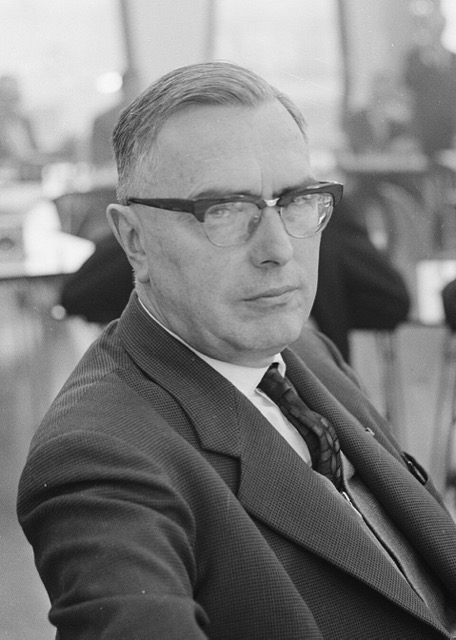
5THWorld chess champion
Max Euwe
Max Euwe was world champion 1935–1937, for 2 years. He won the title in 1935, beating Alexander Alekhine 15½–14½ in 12 cities.
- Born
- 20 May 1901 · Watergraafsmeer, Netherlands
- Died
- 26 November 1981 · Amsterdam, Netherlands
- Learned chess
- Played his first tournament at 10, winning every game
- Profiles
- FIDE World Chess MuseumWikipediaChessmetrics
Every title event
| Year | Opponent | Score | Result | Games | Where |
|---|---|---|---|---|---|
| 1935 | Alexander Alekhine | 15½–14½ | Won | +9 −8 =13 | 12 cities |
| 1937 | Alexander Alekhine | 15½–9½ | Lost | +4 −10 =11 | 9 cities |
Across 2 title matches, Euwe won 13 games, lost 18 and drew 24: a score of 45.5% of the points.
Scores are listed winner first; a dash means the match wasn't played or was a tournament. Games are won, lost and drawn (+ − =) from Euwe's side, counted from chessgames.com and shown only where they add up to the official score. Source: Wikipedia, List of World Chess Championships.
Honours
- 1
- World championship titles
1935
Each year links to its source. World championship titles are title events won or kept. Olympiad board golds are the best score on a board. Most of these events didn't exist before the 1920s.
Impact at home: Netherlands
- GrowthHis world title gave a huge boost to chess in the Netherlands source
- HonoursWon 12 Dutch championships, still a record source
- InstitutionsPresident of FIDE from 1970 to 1978 source
- PoliticsAs FIDE president he came into conflict with the USSR Chess Federation on several occasions source
- InstitutionsTravelled widely as FIDE president, bringing many new members into the organisation source
- PlayersPlayed for the Netherlands at seven Chess Olympiads source
Rivalries
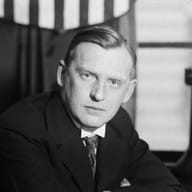
How strong was Euwe?
Max Euwe's best years came before FIDE's first rating list (July 1971). On Chessmetrics, Jeff Sonas's historical rating system, he peaked at 2769 in Jan 1936.
That month the best other player was Alexander Alekhine, at 2758: Euwe was 11 points clear. The top 10 averaged 2711; on today's scale (FIDE's Nov 2026 top 10 average 2777) his peak is about 2834, 10th of the 18 champions. How this is worked out.
Chessmetrics also ranks him 40th of all time on three-year average (2750, 1935-Jan to 1937-Dec). Source.
The road to the title
1911
First tournament[1]
Won every game, at 10
1921–1952
Dutch Chess Championship[1]
12 national titles, a record
Won every Dutch championship he entered from 1921 to 1952, and again in 1955
1926
Doctorate in Mathematics[1]
Doctorate under Roland Weitzenböck
1929
Mathematical Analysis of Chess Rules[1]
Showed the rules of the time did not rule out infinite games
Using the Thue–Morse sequence
1932
Match against Salo Flohr[1]
Drawn match
With his other results, it made Euwe and Flohr Alekhine's most credible challengers, according to Reuben Fine
1934
Zürich 1934 International Tournament[1]
Equal second with Flohr, behind Alekhine
He beat Alekhine in their game
1935-12-15
World Chess Championship Match vs. Alexander Alekhine[1]
Won 15½–14½
30 games in 13 Dutch cities over 80 days; became the fifth world champion
What Euwe changed about chess
- organisationAs FIDE President, he usually did what he considered morally right rather than what was politically expedient.[1]
- popularityHis title gave a huge boost to chess in the Netherlands.[1]
- organisationAs FIDE President he travelled extensively, bringing many new members into the organisation.[1]
Achievements
- 1935-12-15The fifth world champion (1935–1937)[1]
- 1955A record 12 Dutch championships (1921–1955)[1]
- 1970–1978FIDE President, 1970–1978[1]
- 1970–1978As FIDE President, travelled widely and brought many new members into FIDE[1]
- 1935-12-15The 1935 match was the first world championship in which the players had seconds to help with adjourned games[1]
Famous games
Max Euwe v Alexander Alekhine, World Chess Championship 1935, game 26 (Zandvoort) 1935 · 1–0[2]
Tartakower called it "the Pearl of Zandvoort".
Alexander AlekhineMax EuweStart position
- 1.
- 2.
- 3.
- 4.
- 5.
- 6.
- 7.
- 8.
- 9.
- 10.
- 11.
- 12.
- 13.
- 14.
- 15.
- 16.
- 17.
- 18.
- 19.
- 20.
- 21.
- 22.
- 23.
- 24.
- 25.
- 26.
- 27.
- 28.
- 29.
- 30.
- 31.
- 32.
- 33.
- 34.
- 35.
- 36.
- 37.
- 38.
- 39.
- 40.
- 41.
- 42.
- 43.
- 44.
- 45.
- 46.
- 47.
- 1–0
Arrow keys step through the moves; click any move to jump to it. Pieces by Colin M. L. Burnett (BSD licence).
Game score: chessgames.com
Efim Geller v Max Euwe, Zurich Candidates 1953 1953 · 0–1[2]
Geller's attack seemed to sweep Euwe off the board, but a sacrifice on move 22 began a winning counterattack.
Max EuweEfim GellerStart position
- 1.
- 2.
- 3.
- 4.
- 5.
- 6.
- 7.
- 8.
- 9.
- 10.
- 11.
- 12.
- 13.
- 14.
- 15.
- 16.
- 17.
- 18.
- 19.
- 20.
- 21.
- 22.
- 23.
- 24.
- 25.
- 26.
- 0–1
Arrow keys step through the moves; click any move to jump to it. Pieces by Colin M. L. Burnett (BSD licence).
Game score: chessgames.com
Salo Flohr v Max Euwe, Flohr–Euwe match 1932, game 1 1932 · 1-0[2]
Flohr won with what Wikipedia calls a textbook minority attack: a lesson Euwe was on the wrong side of.
Max EuweSalo FlohrStart position
- 1.
- 2.
- 3.
- 4.
- 5.
- 6.
- 7.
- 8.
- 9.
- 10.
- 11.
- 12.
- 13.
- 14.
- 15.
- 16.
- 17.
- 18.
- 19.
- 20.
- 21.
- 22.
- 23.
- 24.
- 25.
- 26.
- 27.
- 28.
- 29.
- 30.
- 31.
- 32.
- 33.
- 34.
- 35.
- 36.
- 37.
- 38.
- 39.
- 40.
- 41.
- 42.
- 43.
- 44.
- 45.
- 46.
- 1-0
Arrow keys step through the moves; click any move to jump to it. Pieces by Colin M. L. Burnett (BSD licence).
Game score: chessgames.com
In his words
More on Max Euwe
Quick answers
When was Max Euwe world chess champion?
1935–1937: 2 years. He won the title in 1935, beating Alexander Alekhine 15½–14½ in 12 cities.
Sources
- [1] en.wikipedia.org: "Euwe played his first tournament at age 10, winning every game."
- [2] en.wikipedia.org: "This decisive game from the 1935 match for the world championship was dubbed 'The Pearl of Zandvoort' by Tartakower."
- [3] en.wikiquote.org: "Strategy requires thought, tactics require observation."