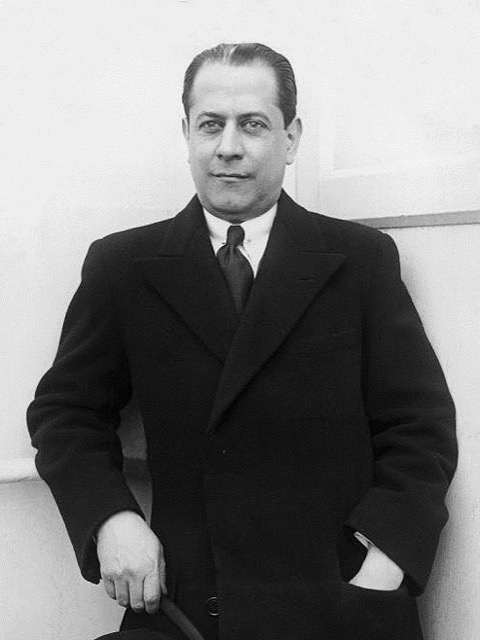
3RDWorld chess champion
José Raúl Capablanca
José Raúl Capablanca was world champion 1921–1927, for 6 years. He won the title in 1921, beating Emanuel Lasker 9–5 in Havana.
- Born
- 19 November 1888 · Havana, Cuba
- Died
- 8 March 1942 · Mount Sinai Hospital, New York City, United States
- Learned chess
- watching his father play with friends in Havana
- Profiles
- FIDE World Chess MuseumWikipediaChessmetrics
Every title event
| Year | Opponent | Score | Result | Games | Where |
|---|---|---|---|---|---|
| 1921 | Emanuel Lasker | 9–5 | Won | +4 −0 =10 | Havana |
| 1927 | Alexander Alekhine | 18½–15½ | Lost | +3 −6 =25 | Buenos Aires |
Across 2 title matches, Capablanca won 7 games, lost 6 and drew 35: a score of 51% of the points against the best player of his day.
Scores are listed winner first; a dash means the match wasn't played or was a tournament. Games are won, lost and drawn (+ − =) from Capablanca's side, counted from chessgames.com and shown only where they add up to the official score. Source: Wikipedia, List of World Chess Championships.
Honours
- 1
- World championship titles
1921
Each year links to its source. World championship titles are title events won or kept. Olympiad board golds are the best score on a board. Most of these events didn't exist before the 1920s.
Impact at home: Cuba
- PoliticsTook a job at the Cuban Foreign Office in 1913 that made him financially secure for life source
- HonoursHad no fixed duties: he was expected to act as an ambassador-at-large who put Cuba on the map wherever he travelled source
- HonoursGiven a public funeral in Havana's Colón Cemetery in March 1942 source
- InstitutionsThe Capablanca Memorial has been held in Cuba, most often in Havana, since 1962 source
- PlayersNarrowly beat the Cuban champion, Juan Corzo, in 1901 source
Rivalries
How strong was Capablanca?
José Raúl Capablanca's best years came before FIDE's first rating list (July 1971). On Chessmetrics, Jeff Sonas's historical rating system, he peaked at 2877 in May 1921.
That month the best other player was Emanuel Lasker, at 2762: Capablanca was 115 points clear. The top 10 averaged 2716; on today's scale (FIDE's Nov 2026 top 10 average 2777) his peak is about 2937, 3rd of the 18 champions. How this is worked out.
Chessmetrics also ranks him 3rd of all time on three-year average (2857, 1919-Jan to 1921-Dec). Source.
The road to the title
1901-11-17
Match against Juan Corzo[1]
Beat Cuban champion Juan Corzo
Two days before his 13th birthday
1909
Match against Frank Marshall[1]
Won
It earned him an invitation to San Sebastián 1911
1911
San Sebastián 1911 International Tournament[1]
First place
Ahead of Rubinstein, Nimzowitsch and Tarrasch
1916–1924
Unbeaten run[1]
Undefeated from 10 February 1916 to 21 March 1924
A run that included the title match with Lasker
1919
Hastings Victory Tournament[1]
First place (10½/11)
One point ahead of Kostić
1920-06-27
Lasker resigns the title[1]
Lasker resigned the title to him
"You have earned the title not by the formality of a challenge, but by your brilliant mastery."
1921-04-21
World Chess Championship Match vs. Emanuel Lasker (Havana)[1]
4 wins, no losses, 10 draws
Lasker resigned the match with ten games still to play
What Capablanca changed about chess
Achievements
- 1921-04-21Third World Chess Champion (1921–1927)[1]
- 1924-03-21Undefeated from February 1916 to March 1924, including the Lasker match[1]
- 1911Won San Sebastián 1911 ahead of Rubinstein, Nimzowitsch and Tarrasch[1]
- 1921Chess Fundamentals, which Botvinnik regarded as the best chess book ever written[1]
- 1918Beat Marshall's prepared attacking variation over the board (1918)[1]
Famous games
Jose Raul Capablanca v Frank James Marshall, New York 1918 · 1–0[1]
Capablanca defended against an extremely aggressive attack that Marshall had prepared.
Frank James MarshallJose Raul CapablancaStart position
- 1.
- 2.
- 3.
- 4.
- 5.
- 6.
- 7.
- 8.
- 9.
- 10.
- 11.
- 12.
- 13.
- 14.
- 15.
- 16.
- 17.
- 18.
- 19.
- 20.
- 21.
- 22.
- 23.
- 24.
- 25.
- 26.
- 27.
- 28.
- 29.
- 30.
- 31.
- 32.
- 33.
- 34.
- 35.
- 36.
- 1–0
Arrow keys step through the moves; click any move to jump to it. Pieces by Colin M. L. Burnett (BSD licence).
Game score: chessgames.com
Jose Raul Capablanca v Savielly Tartakower, New York 1924 · 1–0[1]
It ends in one of the most revered endgames in chess history.
Savielly TartakowerJose Raul CapablancaStart position
- 1.
- 2.
- 3.
- 4.
- 5.
- 6.
- 7.
- 8.
- 9.
- 10.
- 11.
- 12.
- 13.
- 14.
- 15.
- 16.
- 17.
- 18.
- 19.
- 20.
- 21.
- 22.
- 23.
- 24.
- 25.
- 26.
- 27.
- 28.
- 29.
- 30.
- 31.
- 32.
- 33.
- 34.
- 35.
- 36.
- 37.
- 38.
- 39.
- 40.
- 41.
- 42.
- 43.
- 44.
- 45.
- 46.
- 47.
- 48.
- 49.
- 50.
- 51.
- 52.
- 1–0
Arrow keys step through the moves; click any move to jump to it. Pieces by Colin M. L. Burnett (BSD licence).
Game score: chessgames.com
Jose Raul Capablanca v Rudolf Spielmann, New York 1927 · 1–0[1]
A tactical game that won Capablanca the brilliancy prize.
Rudolf SpielmannJose Raul CapablancaStart position
- 1.
- 2.
- 3.
- 4.
- 5.
- 6.
- 7.
- 8.
- 9.
- 10.
- 11.
- 12.
- 13.
- 14.
- 15.
- 16.
- 17.
- 18.
- 19.
- 20.
- 21.
- 22.
- 23.
- 24.
- 25.
- 26.
- 1–0
Arrow keys step through the moves; click any move to jump to it. Pieces by Colin M. L. Burnett (BSD licence).
Game score: chessgames.com
In his words
"In order to improve your game you must study the endgame before anything else; for, whereas the endings can be studied and mastered by themselves, the middlegame and the opening must be studied in relation to the endgame."[2]
"Ninety percent of the book variations have no great value, because either they contain mistakes or they are based on fallacious assumptions; just forget about the openings and spend all that time on the endings. In the long run you will get much better results that way."[2]
"Morphy's principal strength does not rest upon his power of combination but in his position play and his general style."[2]
More on José Raúl Capablanca
Quick answers
When was José Raúl Capablanca world chess champion?
1921–1927: 6 years. He won the title in 1921, beating Emanuel Lasker 9–5 in Havana.
Sources
- [1] en.wikipedia.org: "He beat Cuban champion Juan Corzo in a match on 17 November 1901, two days before his 13th birthday."
- [2] en.wikiquote.org: "In order to improve your game you must study the endgame before anything else; for, whereas the endings can be studied and mastered by themselves, the middlegame and the opening must be studied in relation to the endgame."