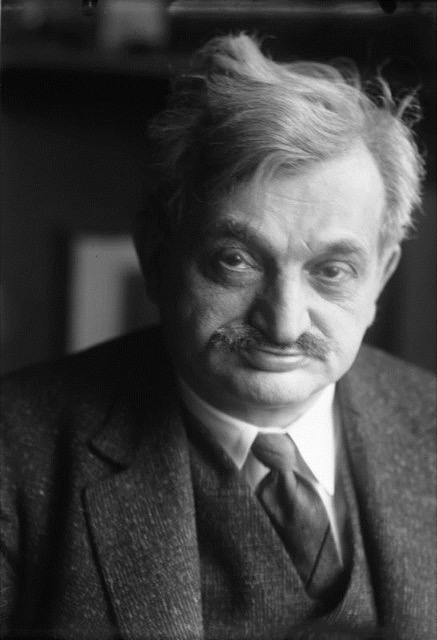
2NDWorld chess champion
Emanuel Lasker
Emanuel Lasker was world champion 1894–1921, for 27 years. He won the title in 1894, beating Wilhelm Steinitz 12–7 in New York City (1–8), Philadelphia (9–11), Montréal (12–19).
- Born
- 24 December 1868 · Berlinchen, Neumark, Kingdom of Prussia
- Died
- 11 January 1941 · Mount Sinai Hospital, New York City, United States
- Learned chess
- Sent to Berlin at eleven to study mathematics; his brother Berthold taught him chess
- Profiles
- FIDE World Chess MuseumWikipediaChessmetrics
Every title event
| Year | Opponent | Score | Result | Games | Where |
|---|---|---|---|---|---|
| 1894 | Wilhelm Steinitz | 12–7 | Won | +10 −5 =4 | New York City (1–8), Philadelphia (9–11), Montréal (12–19) |
| 1896–1897 | Wilhelm Steinitz | 12½–4½ | Won | +10 −2 =5 | Moscow |
| 1907 | Frank Marshall | 11½–3½ | Won | +8 −0 =7 | New York City (1–6, 15), Philadelphia (7–8), Washington, D.C. (9), Baltimore (10), Chicago (11), Memphis (12–14) |
| 1908 | Siegbert Tarrasch | 10½–5½ | Won | +8 −3 =5 | Düsseldorf (1–4), Munich (5–16) |
| Jan–Feb 1910 | Carl Schlechter | 5–5 | Drawn, kept the title | +1 −1 =8 | Vienna (1–5), Berlin (6–10) |
| Nov–Dec 1910 | Dawid Janowski | 9½–1½ | Won | +8 −0 =3 | Berlin |
| 1921 | José Raúl Capablanca | 9–5 | Lost | +0 −4 =10 | Havana |
Across 7 title matches, Lasker won 45 games, lost 15 and drew 42: a score of 64.7% of the points against the best player of his day.
Scores are listed winner first; a dash means the match wasn't played or was a tournament. Games are won, lost and drawn (+ − =) from Lasker's side, counted from chessgames.com and shown only where they add up to the official score. Source: Wikipedia, List of World Chess Championships.
Impact at home: Germany
- PoliticsAs Jews, he and his wife Martha were forced to leave Germany source
- HonoursEarned a doctorate in mathematics in 1902 source
- PlayersFounded no school of players with a similar style source
- InstitutionsOne of the strongest Go players in Germany and Europe, and an occasional writer for the Deutsche Go-Zeitung source
- HonoursAn expert bridge player who represented Germany at international events in the early 1930s source
Rivalries
How strong was Lasker?
Emanuel Lasker's best years came before FIDE's first rating list (July 1971). On Chessmetrics, Jeff Sonas's historical rating system, he peaked at 2878 in May 1894.
That month the best other player was Siegbert Tarrasch, at 2773: Lasker was 105 points clear. The top 10 averaged 2716; on today's scale (FIDE's Nov 2026 top 10 average 2777) his peak is about 2938, 2nd of the 18 champions. Few people played chess professionally then, so the gap to the rest was naturally wider. How this is worked out.
Chessmetrics also ranks him 4th of all time on three-year average (2855, 1894-Jan to 1896-Dec). Source.
The road to the title
1889
Breslau Hauptturnier A[1]
Won; earned the title of master
It let him play in master tournaments
1889-08
Amsterdam International Tournament[1]
Second place
Ahead of Mason and Gunsberg
1892-03
London Tournaments[1]
Won two tournaments
The second and stronger without losing a game
1893-10
New York City Tournament[1]
13/13
He won all thirteen games
1894-05-26
World Chess Championship Match vs. Wilhelm Steinitz[1]
Beat Steinitz: 10 wins, 5 losses, 4 draws
Became the second world champion
1896–1897
World Championship Rematch vs. Wilhelm Steinitz (Moscow)[1]
10 wins, 2 losses, 5 draws
Confirmed his title even more convincingly
What Lasker changed about chess
Achievements
- 1921World champion for 27 years (1894–1921), the longest reign[1]
- 1893-1013/13 at New York 1893, one of the few perfect scores in a significant tournament[1]
- 1895–1900First at St Petersburg 1895–96, Nuremberg 1896, London 1899 and Paris 1900[1]
- 1924Won New York 1924, 1½ points ahead of Capablanca[1]
- 1927Lasker's Manual of Chess (1927)[1]
Famous games
Emanuel Lasker v Johann Hermann Bauer, Amsterdam 1889 · 1–0[1]
The two-bishop sacrifice now known as the "Lasker–Bauer combination".
Loading the board…
Game score: en.wikipedia.org
Harry Nelson Pillsbury v Emanuel Lasker, St Petersburg 1895–96 1895 · 0–1[1]
A brilliant sacrifice on move 17 led to a winning attack.
Loading the board…
Game score: chessgames.com
Emanuel Lasker v Jose Raul Capablanca, St. Petersburg 1914 · 1–0[1]
Needing a win, Lasker surprised with a quiet opening that let Capablanca simplify early, and won.
Loading the board…
Game score: chessgames.com
In his words
"On the chessboard, lies and hypocrisy do not survive long."[2]
"Education in Chess has to be an education in independent thinking and judgement. Chess must not be memorized, simply because it is not important enough."[2]
"He who wants to educate himself in Chess must evade what is dead in Chess - artificial theories, supported by few instances and upheld by an excess of human wit"[2]
More on Emanuel Lasker
Quick answers
When was Emanuel Lasker world chess champion?
1894–1921: 27 years. He won the title in 1894, beating Wilhelm Steinitz 12–7 in New York City (1–8), Philadelphia (9–11), Montréal (12–19).
Sources
- [1] en.wikipedia.org: "Winning the Hauptturnier earned Lasker the title of "master"."
- [2] en.wikiquote.org: "On the chessboard, lies and hypocrisy do not survive long."