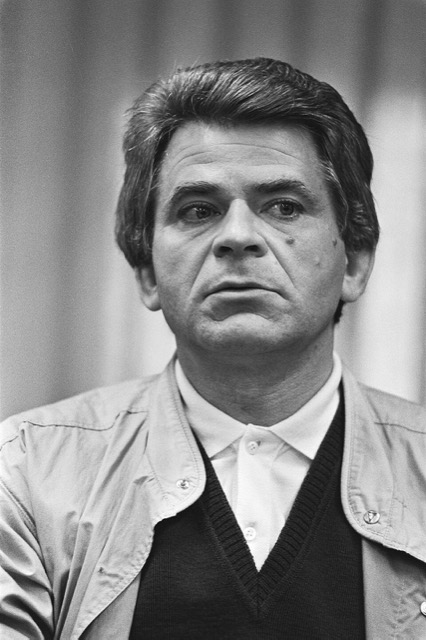
10THWorld chess champion
Boris Spassky
Boris Spassky was world champion 1969–1972, for 3 years. He won the title in 1969, beating Tigran Petrosian 12½–10½ in Moscow.
- Born
- 30 January 1937 · Leningrad, Russian SFSR, Soviet Union
- Died
- 27 February 2025 · Moscow, Russia
- Learned chess
- learned to play chess at age five on an evacuation train from besieged Leningrad during World War II
- Profiles
- FIDE World Chess MuseumWikipediaChessmetrics
Every title event
| Year | Opponent | Score | Result | Games | Where |
|---|---|---|---|---|---|
| 1966 | Tigran Petrosian | 12½–11½ | Lost | +3 −4 =17 | Moscow |
| 1969 | Tigran Petrosian | 12½–10½ | Won | +6 −4 =13 | Moscow |
| 1972 | Bobby Fischer | 12½–8½ | Lost | +3 −7 =11 | Reykjavík |
Across 3 title matches, Spassky won 12 games, lost 15 and drew 41: a score of 47.8% of the points.
Scores are listed winner first; a dash means the match wasn't played or was a tournament. Games are won, lost and drawn (+ − =) from Spassky's side, counted from chessgames.com and shown only where they add up to the official score. Source: Wikipedia, List of World Chess Championships.
Honours
- 1
- World championship titles
1969
Each year links to its source. * Shared title. World championship titles are title events won or kept. Olympiad board golds are the best score on a board. Most of these events didn't exist before the 1920s.
Impact at home: Soviet Union and France and Russia
- HonoursMoved to France in 1976 and became a French citizen in 1978 source
- PoliticsLeft France in 2012 and returned to Russia source
- PlayersThe youngest Soviet player to reach first category (10), candidate master (11) and Soviet master (15) source
- InstitutionsPlayed first board for the USSR in the 1970 USSR v Rest of the World match in Belgrade source
- InstitutionsPlayed board one for France at the first World Team Championship, Lucerne 1985 source
The Soviet Union had 34 grandmasters when Spassky became world champion in 1969. By 1979 the Soviet Union had 60, and by 1991, its last year, 129.
| Measure | 1969when he became champion | 1979ten years on | 1991the Soviet Union's last year |
|---|---|---|---|
| Grandmasters | 34 | 60 | 129 |
| In the world top 100 | 43 Jul 1971 list | 44 Jan 1979 list | 45 Jul 1991 list |
Soviet grandmasters, 1950–1991
Move over the chart to see any year.
Grandmasters by the year FIDE gave the title, from Wikipedia's list of all 2,162 grandmasters (October 2026); Soviet players are counted to 1991, including those the list now files under a successor state. Top 100 from FIDE's rating lists (OlimpBase to 2001, then FIDE); FIDE's lists begin in 1971. These numbers show what happened around each champion, not what he caused: many things grow a country's chess.
Rivalries
How strong was Spassky?
Boris Spassky's best years came before FIDE's first rating list (July 1971). On Chessmetrics, Jeff Sonas's historical rating system, he peaked at 2773 in Jul 1969. FIDE's lists, which came later, rated him at most 2690 (Jul 1971).
That month the best other player was Bobby Fischer, at 2793: 20 points higher. The top 10 averaged 2754; on today's scale (FIDE's Nov 2026 top 10 average 2777) his peak is about 2796, 16th of the 18 champions. How this is worked out.
On Chessmetrics' list at his peak (July 1969) Spassky was third, behind Fischer and Korchnoi.
Chessmetrics also ranks him 26th of all time on three-year average (2767, 1969-Jan to 1971-Dec). Source.
Every month as a table
| FIDE list | Rating |
|---|---|
| Jul 1991 | 2550 |
| Jan 1991 | 2560 |
| Jul 1990 | 2570 |
| Jan 1990 | 2560 |
| Jul 1989 | 2580 |
| Jan 1989 | 2580 |
| Jul 1988 | 2560 |
| Jan 1988 | 2565 |
| Jul 1987 | 2570 |
| Jan 1987 | 2605 |
| Jul 1986 | 2620 |
| Jan 1986 | 2610 |
| Jul 1985 | 2590 |
| Jan 1985 | 2580 |
| Jul 1984 | 2590 |
| Jan 1984 | 2615 |
| Jul 1983 | 2605 |
| Jan 1983 | 2605 |
| Jul 1982 | 2610 |
| Jan 1982 | 2625 |
| Jul 1981 | 2630 |
| Jan 1981 | 2635 |
| Jan 1980 | 2615 |
| Jan 1979 | 2640 |
| Jan 1978 | 2630 |
| Jan 1977 | 2610 |
| Jan 1976 | 2630 |
| Jan 1975 | 2625 |
| May 1974 | 2650 |
| Jul 1973 | 2655 |
| Jul 1972 | 2660 |
| Jul 1971 | 2690 |
The road to the title
1947
Simultaneous Exhibition vs. Botvinnik (Leningrad)[1]
Beat Soviet champion Botvinnik in a simultaneous exhibition, aged 10
First drew wide attention
1955-08
World Junior Chess Championship (Antwerp)[1]
Won: 6/7 to qualify, then 8/9 in the final
A full point ahead of Edmar Mednis
1965
Candidates matches, Riga 1965[1]
Beat Keres 6–4 and Geller 5½–2½
Careful strategy against Keres, mating attacks against Geller
1968
Candidates 1968[1]
Won the Candidates again
His second Candidates win in a row
1969-06-17
World Chess Championship Match vs. Petrosian (Moscow)[1]
Won 12½–10½
Became world champion
1972-09-01
World Chess Championship Match vs. Bobby Fischer (Reykjavik)[1]
Lost to Fischer
The "Match of the Century", at the height of the Cold War, seen as symbolic of the superpowers' confrontation
What Spassky changed about chess
- strategyDescribed as a "universal" player whose main focus was the middlegame and tactics.[1]
- openingSucceeded with many openings, including the aggressive King's Gambit, rarely seen at top level.[1]
- otherFIDE President Arkady Dvorkovich called him "not only one of the greatest players of the Soviet era and the world, but also a true gentleman".[1]
Achievements
Famous games
Boris Spassky v David Bronstein, 27th USSR Championship (Leningrad) 1960 · 1–0[1]
A spectacular rook sacrifice; the game was used, slightly changed, in the opening scene of the James Bond film From Russia with Love.
David BronsteinBoris SpasskyStart position
- 1.
- 2.
- 3.
- 4.
- 5.
- 6.
- 7.
- 8.
- 9.
- 10.
- 11.
- 12.
- 13.
- 14.
- 15.
- 16.
- 17.
- 18.
- 19.
- 20.
- 21.
- 22.
- 23.
- 1–0
Arrow keys step through the moves; click any move to jump to it. Pieces by Colin M. L. Burnett (BSD licence).
Game score: chessgames.com
Boris Spassky v Tigran Petrosian, World Chess Championship 1969, game 19 1969 · 1–0[1]
Aggressive play and combinations: Spassky at his best.
Tigran PetrosianBoris SpasskyStart position
- 1.
- 2.
- 3.
- 4.
- 5.
- 6.
- 7.
- 8.
- 9.
- 10.
- 11.
- 12.
- 13.
- 14.
- 15.
- 16.
- 17.
- 18.
- 19.
- 20.
- 21.
- 22.
- 23.
- 24.
- 1–0
Arrow keys step through the moves; click any move to jump to it. Pieces by Colin M. L. Burnett (BSD licence).
Game score: chessgames.com
Bent Larsen v Boris Spassky, USSR v Rest of the World, Belgrade 1970 1970 · 0–1[1]
A short win over a noted grandmaster.
Boris SpasskyBent LarsenStart position
- 1.
- 2.
- 3.
- 4.
- 5.
- 6.
- 7.
- 8.
- 9.
- 10.
- 11.
- 12.
- 13.
- 14.
- 15.
- 16.
- 17.
- 0–1
Arrow keys step through the moves; click any move to jump to it. Pieces by Colin M. L. Burnett (BSD licence).
Game score: chessgames.com
In his words
"I prefer to have good relations with my opponent. My chess suffers if I have to play a man I consider unfriendly."[1]
"When I am in form my style is a little bit stubborn, almost brutal. Sometimes I feel a great spirit of fight which drives me on."[1]
"I have often found that I have caught the basic idea of a position, the correct plan, but my great weakness is that I fail to follow the logical pattern through from beginning to end."[1]
More on Boris Spassky
Quick answers
When was Boris Spassky world chess champion?
1969–1972: 3 years. He won the title in 1969, beating Tigran Petrosian 12½–10½ in Moscow.
Sources
- [1] en.wikipedia.org: "He first drew wide attention in 1947, aged 10, when he defeated Soviet champion Mikhail Botvinnik in a simultaneous exhibition in Leningrad."